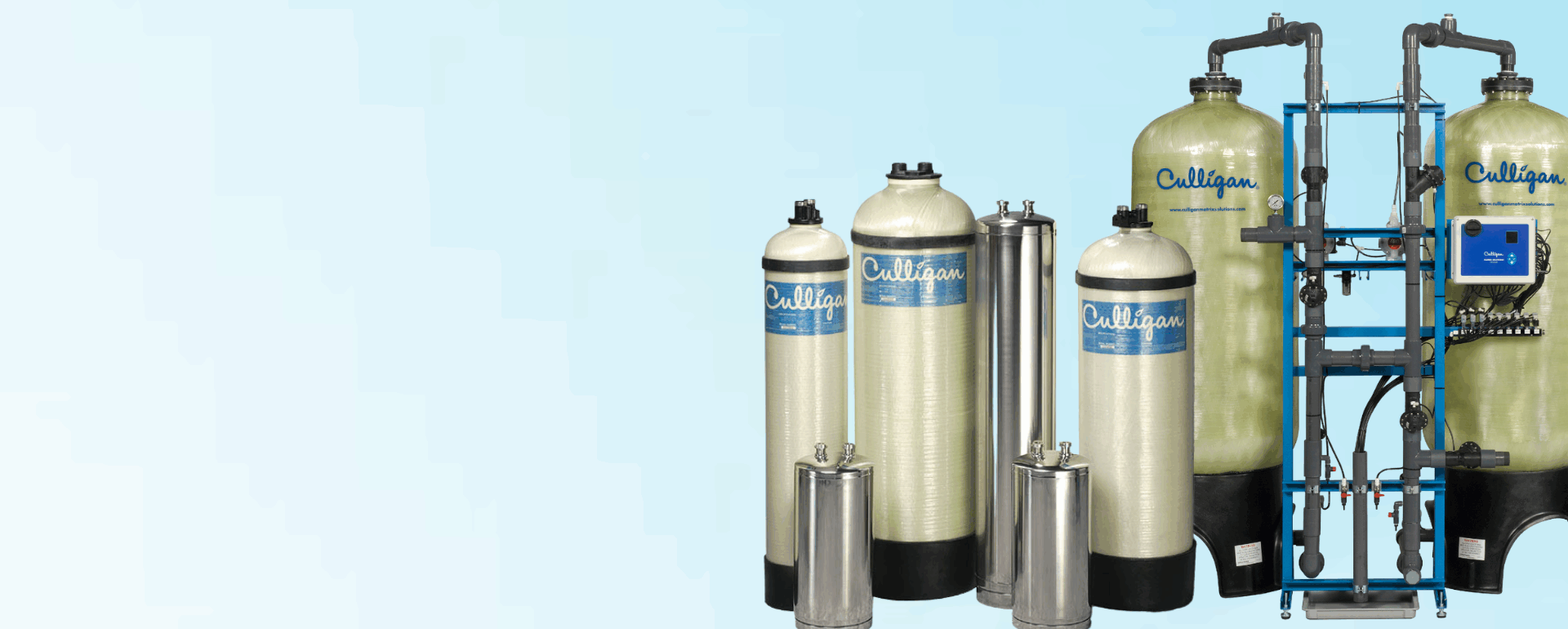


All the benefits of deionized water without the ridiculous costs.
No capital investment, maintenance, labor or chemical costs, or wastewater treatment problems.
-
Features
Our DI systems feature a charge ion exchange resin. This reduces mineral ions from water, improves water quality and reduces scale buildup, improving commercial and industrial operations.
-
Benefits
Provides high-quality water for specialized applications without capital investment. Regeneration or exchange provided by Culligan Denison & Sherman. This system reduces on-site labor and regenerant chemical handling. We offer a configuration of weal-base or strong-base resin tanks.
-
Advantages of PEDI Systems
- No chemicals or hazardous waste – eliminates the need for OSHA training, containment, and waste treatment.
- Lower maintenance costs – Culligan Texas handles all exhausted tank exchanges.
- No capital investment required – pay per tank exchange or per 1,000 gallons of demineralized water consumed.
- Flexible to your needs – flow rates from 0.5 gpm to 500 gpm and water quality from 50,000 ohm-cm to 18,000,000 ohm-cm.
- Metals recovery and waste treatment – removes heavy metals from waste streams to meet discharge permit requirements. Regenerated tanks are processed by a licensed recovery facility, with recovered metals recycled.
-
Automatic Deionization
Automatic DI is a proven, cost-effective component in an integrated Culligan system for improved commercial and industrial quality. Its corrosion-resistant construction features a pumped regenerant system for consistent dosing. The system automatically rinses until your desired effluent quality is reached.
Red River Culligan Supports
Industries We Serve
Healthcare & Laboratories
Sterile processing, dialysis, lab testing.
Pharmaceutical & Biotech
R&D, production, and cleanroom environments.
Electronics & Semiconductor
High-resistivity water for rinsing and assembly.
Food & Beverage Processing
Ingredient water, rinsing, and packaging.
Automotive & Aerospace
Coating, painting, and precision manufacturing.
Power Generation & Boilers
Scale-free feedwater for efficiency and reliability.
Municipal & Education
Research centers, universities, and industrial training labs.
Related Products
Commercial and Industrial Products For Any Business
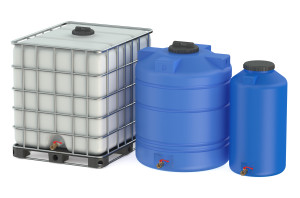
Bulk Water Delivery
- Bulk water delivery & hauling
- Bulk water fill-ups on-site
- Bulk water scheduled deliveries
- Tanks & Totes
- …& much more!

Bottle-Free Coolers & Ice Makers
- Combination hot/cold water dispensers and ice makers
- No pickups/deliveries
- Touchless dispensing + RO filtration
- Built-in leak detection
Learn More
DIONIZED WATER TREATMENT in Denison & Sherman
What is deionized water?
Deionized (DI) water is water that has had dissolved mineral ions (such as calcium, sodium, iron, copper, and chloride) removed through ion exchange resins. The process of deionization removes ions from water using ion exchange resins. It produces highly purified water by attracting and removing positively and negatively charged ions, making it useful in industries like electronics and pharmaceuticals.
What are the types of high purity water?
- Deionized (DI) Water – Removes ionized salts and charged particles. Commonly used in labs, electronics manufacturing, and processes where mineral deposits can disrupt operations.
- De-mineralized Water – Similar to DI, with most minerals and salts removed through ion exchange, carbon filtering, or microfiltration. Used in applications requiring high purity.
- High Purity Water – Essential in semiconductor and pharmaceutical manufacturing, where impurities can affect processes or product quality. Achieved through multi-stage treatment like RO, UV, and DI.
- Lab & Medical Grade – Meets strict purity standards for research and medical use. Involves advanced filtration, RO, DI, UV treatments, and sub-micron filtering to remove bacteria and pyrogens.
How is DI different from reverse osmosis (RO) or softened water?
- Softened water removes hardness minerals only.
- RO removes a wide spectrum of impurities but may leave trace ions.
- DI produces the highest resistivity/purity levels, ideal for lab, medical, and industrial use.
How long do resins last?
Resin life depends on incoming water quality and usage volume. Culligan technicians monitor and exchange tanks as needed to ensure continuous water purity.
What are the operating costs?
Running a DI water system requires more than just the equipment itself. Costs include the upfront system investment, replacement of consumables such as resins and filters, energy use, water consumption, and waste disposal. You’ll also need to account for maintenance, repairs, labor, and the handling of regeneration byproducts. Careful cost management and system optimization help ensure consistent, high-quality water production while keeping operating expenses under control.
What are the maintenance requirements for a DI water system?
Maintaining a DI water system involves regular monitoring of water quality, periodic regeneration or replacement of ion exchange resins, pre-filtration to remove contaminants, system flushing, sanitization to prevent bacterial growth, and regular maintenance checks of system components.
What purity levels can I expect?
Culligan DI systems can achieve effluent water resistivity up to 18 megohm-cm, depending on system design.
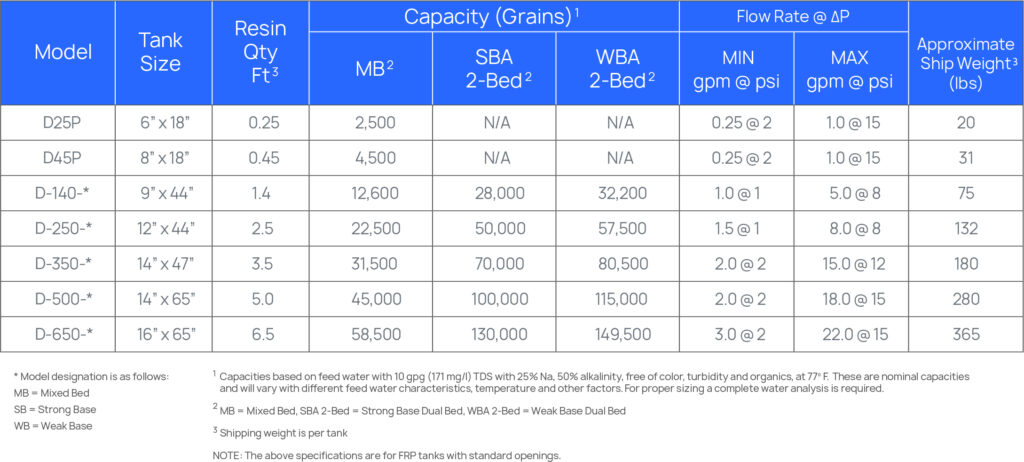
What are the Specifications of DI Models & Tanks?
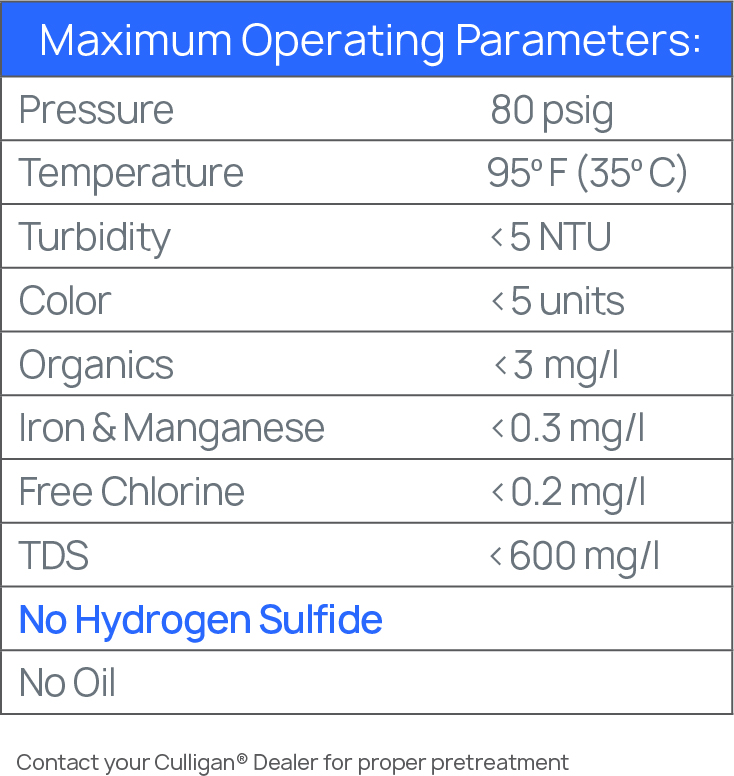
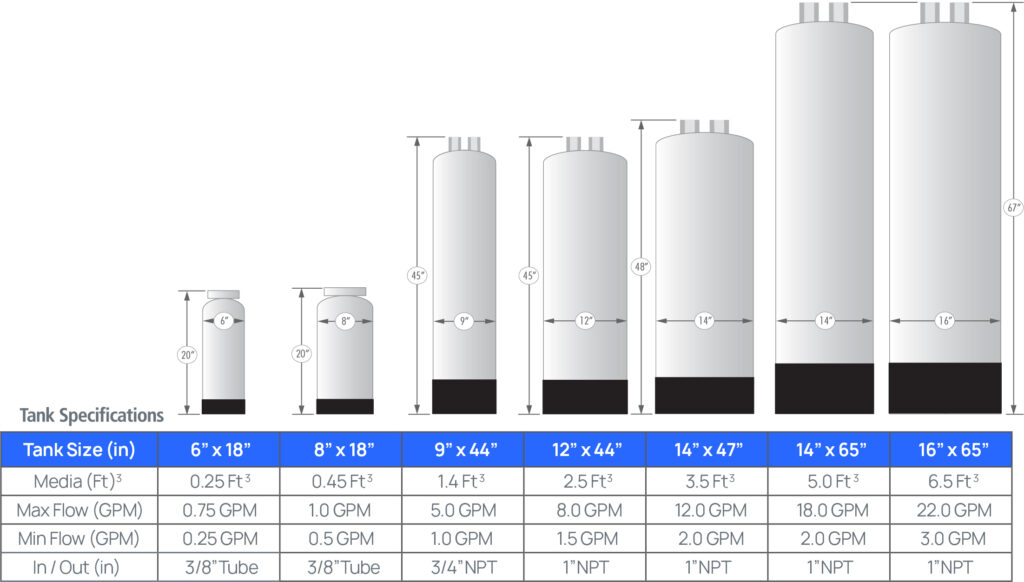
Frequently Asked Business Questions About DI Tanks
What is deionized (DI) water?
Deionized water is water that has had dissolved mineral ions—such as calcium, magnesium, sodium, chloride, and sulfate—removed. The result is high-purity water suitable for industrial, manufacturing, laboratory, and process-critical applications.
What industries use deionized water treatment?
DI water is commonly used by:
- Manufacturing and processing facilities
- Industrial plants
- Laboratories and testing facilities
- Medical and healthcare operations
- Electronics and precision equipment users
- Automotive and metal finishing operations
These applications require consistent water purity to protect equipment and ensure product quality.
Why is deionized water important for industrial operations?
Minerals in untreated water can interfere with processes, leave residue, cause scaling, or affect product quality. Deionized water helps:
- Support quality control and compliance requirements
- Prevent contamination
- Protect sensitive equipment
- Improve consistency in manufacturing
What sizes of DI tanks are available?
We provide DI tanks of all sizes, from small portable exchange tanks to large, high-capacity industrial systems. Tank size and configuration are selected based on flow rate, purity requirements, and operational demand.
Do you offer turnkey deionized water solutions?
Yes. We are a full-service, turnkey provider, handling:
- Water analysis
- System design and sizing
- DI tank delivery and installation
- Resin exchange or regeneration
- Ongoing service and maintenance
This ensures reliable performance with minimal disruption to operations.
Is deionized water treatment available for both short-term and long-term needs?
Yes. DI water treatment can be configured for:
- Temporary or project-based use
- Ongoing industrial operations
- Emergency or backup water needs
Solutions are customized based on business requirements.
How is deionized water different from reverse osmosis (RO)?
Reverse osmosis reduces many contaminants and dissolved solids, while deionization removes nearly all ionic impurities. In many industrial applications, RO is used as a pre-treatment step before DI to improve efficiency and resin life.
Can DI systems be customized for specific purity requirements?
Yes. DI systems are engineered based on the required resistivity or conductivity levels for your application, ensuring water quality meets operational or regulatory standards.
Do you service industrial DI systems locally?
Yes. We provide DI water treatment services throughout Grayson, Cooke, and Fannin counties in Texas, as well as Bryan and Choctaw counties in Oklahoma, supporting industrial and commercial operations across North Texas and Southern Oklahoma.
What ongoing service is required for DI water systems?
DI systems require regular monitoring and resin replacement or exchange. Our service team manages this process to ensure consistent water quality and uninterrupted operation.
How do I get started with deionized water treatment for my facility?
The first step is a professional consultation and water analysis. This allows us to determine purity requirements, system sizing, and whether a standalone DI system or combined treatment approach is best for your operation.
