Fluoride In Water
Many communities are taking a second look at fluoridation levels and motivations, and as the debate continues, it’s a good idea to know some basics about fluoride and its legacy in this country.
In 2015, the U.S. Department of Health and Human Services Agency (HHS) revised what defined acceptable fluoride levels:
“…water systems practicing fluoridation adjust their fluoride content to 0.7 mg/L (parts per million), as opposed to the previous temperature-dependent optimal levels ranging from 0.7 mg/L to 1.2 mg/L. There is no change regarding federal health officials’ strong and long-standing support regarding the value of fluoridation of drinking water.”

Since plant life relies heavily on water, most forms of plants and vegetation contain various levels of fluoride.
The most common use for artificially-created fluoride is the treatment of cavities and supporting dental health. Fluoride has been widely shown to prevent, and even reverse, tooth decay, and has been added to many city water supplies throughout the country as a result.
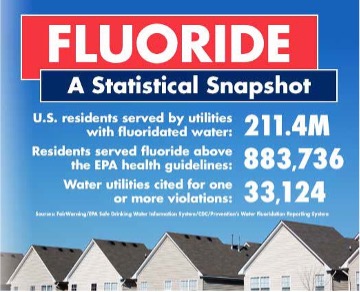
Fluoride In Tap Water: The Basics
After the link was found between its impact on dental health, fluoride made its first appearance in water supplies in Grand Rapids, Michigan in 1945 by a process called fluoridation. This involves adding fluoride to a municipal water supply at anywhere between 0.7 and 1.2 ppm (considered the safe and effective range for fluoride additives.) 0.7 is widely considered the safest level of concentration, as well as the optimal range for preventing tooth decay.
Despite the CDC’s strong backing, however, fluoride in drinking water is not without its critics. For example, recent studies have linked increased fluoride consumption in pregnant women to reduced IQ levels in their children, while other, less alarming studies simply fail to corroborate the dental hygiene benefits of fluoridated water.
Fluoride Removal: The Why And How
If your home has fluoridated water and you’re concerned about it, there are water treatment methods available that specifically address and remove water additives like fluoride.
Reverse osmosis systems for example, are designed to remove hard-to-filter chemicals like fluoride, that many other filtration devices in big box stores and online retailers cannot.
Does Culligan Water Have Fluoride?
Generally, Culligan Water” does not have fluoride, if the reference of Culligan Water is being used in the context of filtered drinking water from one of its bottled water systems, water dispensers, or home water filter systems and your water is from a municipal source containing fluoride.
Do Water Softeners Remove Fluoride?
Water softeners, primarily designed to remove hardness-causing minerals like calcium and magnesium from water, do not typically remove fluoride. The process used in most water softeners is ion exchange, where hard minerals are swapped with sodium or potassium ions. Fluoride, however, is not targeted in this process and remains largely unaffected.
Solutions
Suggested Products
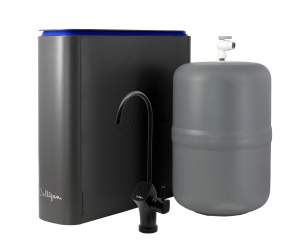
The Aquasential® Smart Reverse Osmosis Water Filter (RO)
- 7 stages of filtration and 12 filter options
- Certified for reduction of 58 contaminants
- 2-in-1 sediment and carbon filter screens out sediment and particles
- Can alert you and your dealer when service or filter replacements are needed
FAQ About Fluoride in Denison & Sherman Water
We Have Answers
What is fluoride?
Fluoride is a naturally occurring mineral found in many water sources. It is also sometimes added by municipal water systems at controlled levels to help reduce tooth decay in communities.
Why is fluoride added to some water supplies?
Many public water systems add fluoride as a public health measure to support dental health. The levels are maintained within guidelines set by health authorities to balance benefits with safety.
Is fluoride naturally occurring or added?
Fluoride can appear naturally in groundwater and well water, depending on local geology. In city water systems, it may be added during treatment for dental health purposes.
Are fluoride levels regulated in drinking water?
Yes. In municipal systems, fluoride levels are regulated and monitored to ensure they stay within recommended public health standards. Homeowners can review their local water quality report to see the specific levels.
Does well water contain fluoride?
Fluoride may or may not be present in private well water. Groundwater fluoride concentration varies based on regional mineral deposits. A water quality test is the only reliable way to determine fluoride levels in a well.
Can fluoride affect the taste or smell of water?
Fluoride itself is typically odorless and tasteless at levels normally found in drinking water. If water has an unusual taste or smell, it’s most often due to chlorine, sulfur, iron, or other minerals, not fluoride.
Is fluoride safe to drink?
At regulated levels used in public water systems, fluoride is generally considered safe and effective for dental health. Individual health needs vary, and some people choose filtration systems that reduce fluoride for personal preference.
How can I find out if my water has fluoride?
The precise way to know your fluoride level is through a professional water test. This is the only method that gives accurate, location-specific data for your home’s water — whether city or well water.
Can home water filters remove fluoride?
Yes. Certain advanced filtration systems, such as reverse osmosis (RO) and some activated alumina media filters, are capable of reducing fluoride levels when properly installed and maintained.
Does fluoride protect teeth?
Research from public health organizations supports that fluoride at recommended levels can help reduce dental cavities. That’s why many communities include it in their water treatment programs.
What areas do you provide information and testing for fluoride?
We provide water testing and educational resources throughout Grayson, Cooke, and Fannin counties in Texas and Bryan and Choctaw counties in Oklahoma. Local testing ensures decisions are based on your specific water source.
